
The question of whether property is truly out of reach for many Europeans is one that both investors and homebuyers ask on a daily basis. Housing in Europe 2025, the most recent interactive housing publication from Eurostat, demonstrates that the answer is complicated and that, in many places, home affordability has emerged as a significant issue. Rising costs, diverse living circumstances, and unequal access to high-quality housing are changing how individuals live and invest within the European Union.
Investors, particularly those interested in markets like Larnaca and other Mediterranean locations, might identify opportunities and pressures by understanding this EU-wide snapshot.
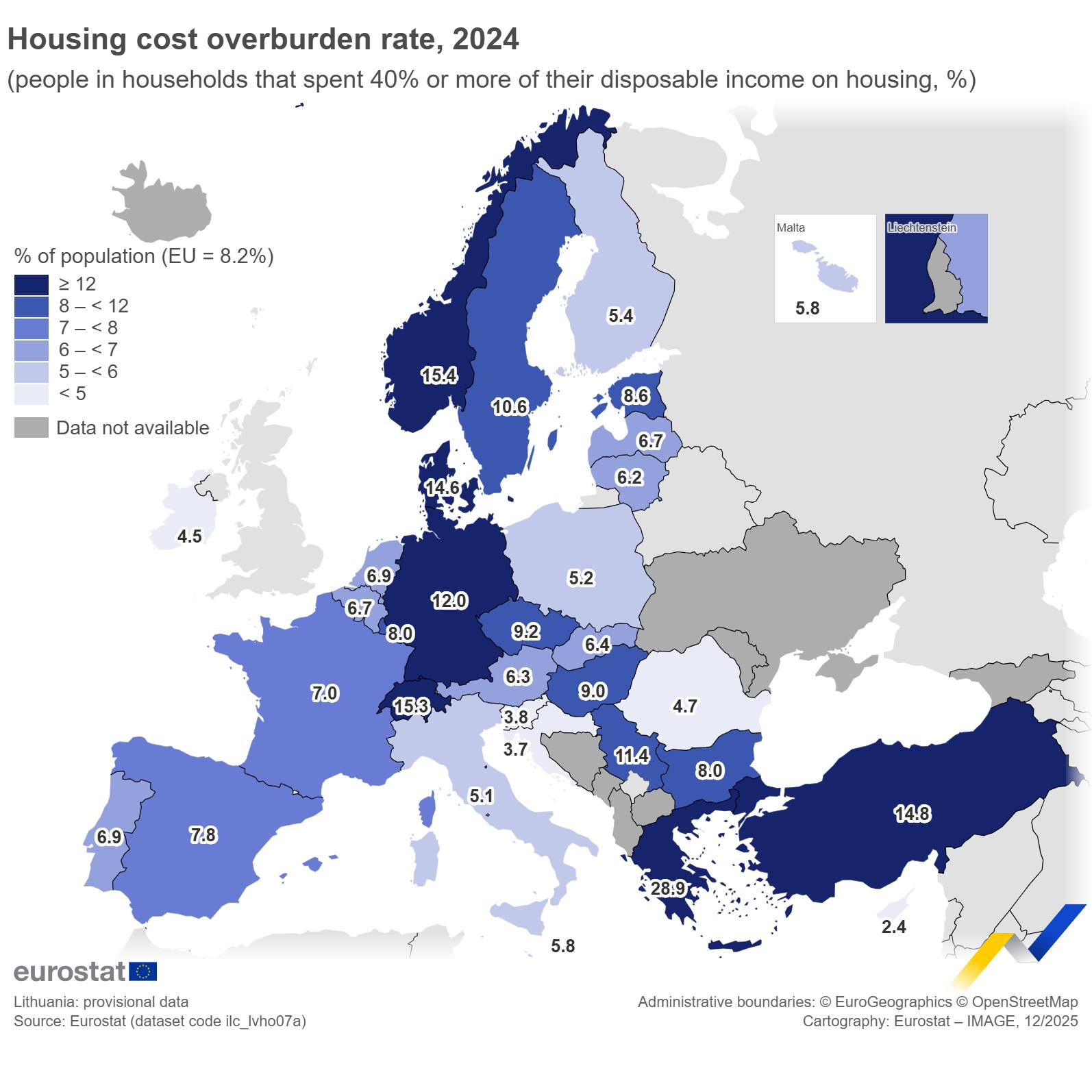
What Do the Latest Housing Data Say About How People Live in Europe?
Eurostat’s interactive publication shows that Europeans experience housing very differently from one another — from ownership levels to dwelling types and living conditions.
For example:
- Around 68 % of people in the EU own their home, with the rest living in rented accommodation.
- The type of housing people live in varies — in cities, flats are far more common, while in towns and rural areas, houses dominate.
- Basic living conditions matter — in 2024, roughly 9 % of Europeans could not afford to keep their home adequately warm, a sign of ongoing cost pressures.
These numbers make it very evident that home quality, location, and basic affordability all have an impact on people’s capacity to live happily. These specifics assist investors in identifying areas where demand may be higher or where future returns may be influenced by legislative changes.
Are House Prices and Rents Still Rising Across the EU?
Yes — housing costs remain a central affordability issue. Eurostat and related EU analyses show house prices in the EU have increased notably in recent years, often outpacing income growth. For example:
- House prices in the EU have grown significantly faster than incomes since 2015, contributing to cost burdens for many households.
- Rents across several EU nations have also climbed, squeezing budgets and limiting disposable income.
This implies that becoming a homeowner has become more difficult for many Europeans, particularly for younger people and first-time purchasers who haven’t accumulated savings or equity. This increases interest in rental markets and affordable housing initiatives from an investment standpoint.
Is the Quality and Size of Housing Affecting Affordability?
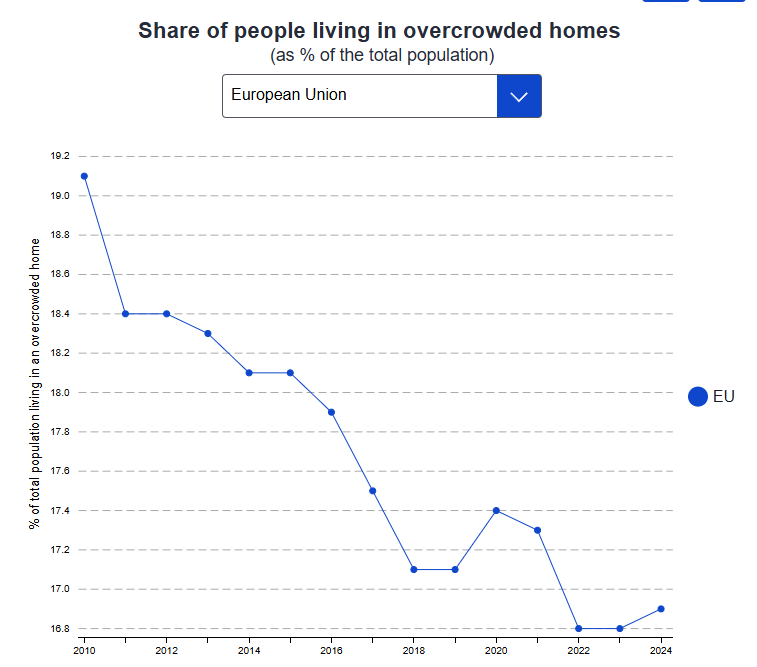
Yes — housing isn’t just expensive; it can also be too small or inadequate for the people living in it. Eurostat data highlights:
- About 17 % of the EU population live in overcrowded homes.
- Conversely, many others live in larger, under-occupied homes, particularly older populations in countries like Cyprus.
The difference has an impact on the perception of inexpensive housing; a larger house isn’t necessarily preferable if it’s not conveniently located or easily accessible. These housing dynamics affect both demand and pricing expectations in areas like Larnaca, where people place a high value on outdoor space and quality of life.
What Does This Mean for Investors in Cities Like Larnaca?
The most important lesson for investors is that problems with house affordability are significantly changing markets. Prices and rentals will probably continue to be under pressure in cities with high demand and low supply, such as several areas of Cyprus. Investors may benefit from this pressure if they concentrate on environmentally friendly, neighborhood-focused housing solutions:
- Rental investments may benefit from strong demand among locals and expatriates alike.
- Affordable housing developments can fill a market gap while also aligning with EU policy priorities.
- Mixed-use properties and regeneration projects near urban hubs in Larnaca are likely to remain attractive.

Are European Policymakers Thinking Ahead?
Indeed, housing is becoming a social and economic priority for the EU and its member states. Policymakers are investigating ways to promote high-quality living conditions, control short-term rentals, and increase the supply of inexpensive housing.
It is not only wise for investors to be informed of these policy changes, but it is also essential. Rental yields, investment returns, and the long-term viability of regional markets can all be impacted by regulatory changes.
How Can Investors Navigate This New Housing Landscape?
Affordability issues highlight that today’s housing market is not just local or national — it’s European. Investors should:
- Understand regional trends through data like Eurostat’s Housing in Europe.
- Monitor policies aimed at supporting housing access.
- Focus on sustainable investments that meet real human needs, not just short-term gains.
Millions of people in Europe may find it more difficult to buy housing, but this complexity also presents chances for careful, long-term investment.
If you want to explore more about the EU housing statistics, you can visit the full interactive publication at https://ec.europa.eu/eurostat/web/interactive-publications/housing-2025